Toxicological Risk Assessment
Ensure your device’s chemical safety is clearly defined and regulator-ready. Our toxicological risk assessments follow international standards and regulatory guidance to deliver practical, science‑based strategy that helps you select safer materials, optimize processing, reduce development risk, and accelerate regulatory submissions. Our services include:
 Extractables & Leachables (E&L) strategy and risk assessment tailored to device use and exposure scenarios Hazard identification and toxicological endpoint characterization Exposure estimation and calculation of margins of safety (MOS), tolerable intakes (TI), and TTC based assessments Read across, surrogate selection, and application of in silico predictive tools to fill data gaps cost effectively Integration with biocompatibility assessments (e.g., ISO 10993 suite) and device specific standards (e.g., ISO 18562) Regulatory support: dossiers, summaries for submissions, and pre submission strategy Gap analysis, risk management plans, and targeted training for project teams
 Toxicological Risk Assessment
  Biological Evaluation
  Risk Communication
  Problem Solving
  Talk to an Expert
Permitted Daily Exposure Evaluation
Definition
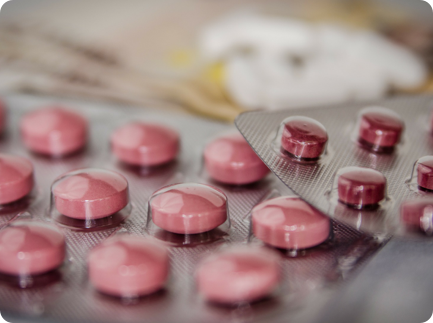
Permitted Daily Exposure (PDE) defines the daily dose of a substance that is unlikely to cause adverse effects over a lifetime of exposure. PDE evaluation aims to ensure that the risks of contamination and cross-contamination arising from the co-production of pharmaceuticals are effectively controlled, thereby safeguarding drug quality and patient safety.
How We Evaluate PDE:
- Review high-quality toxicity data, registered materials, and authoritative safety data.
- Identify conservative point of departure (e.g., NOAEL, LOAEL).
- Apply appropriate uncertainty factors (UF1–UFn) to calculate PDE.
- Use predictive tools (e.g., QSAR) when necessary to estimate toxicity values.
Relevant Guidelines:
- ICH Q3C: guideline for residual solvents
- ICH Q3D: guideline for elemental impurities
- ISO 10993-17: Biological evaluation of medical devices — Part 17: Toxicological risk assessment of medical device constituents (2023)
- EMA/CHMP/CVMP/SWP/169430/2012: Health-based exposure limits in pharmaceutical manufacturing
- Published literature on “Setting Occupational Exposure Limits (OELs) for Pharmaceuticals”

38,000+
Our Advantages in Toxicological Risk Assessment
- Our Advantages in Toxicological Risk AssessmentAccredited by DABT, ERT and DCST, with practical regulatory experience across the U.S., Europe and Asia-Pacific.
- Deep toxicology knowledge base38,000+ assessments on raw materials and extractables/leachables to support robust, scientifically defensible risk assessments and biological evaluations.
- Regulatory‑ready reportingStandardized, submission‑oriented report formats and structures designed to meet both regional and accelerate international market access.
- Advanced in silico capabilityinternationally recognized computational tools used to fill data gaps cost‑effectively and strengthen weight‑of‑evidence conclusions.
- Trusted partner to sponsors worldwideExtensive experience working with global sponsors across startup, mid‑stage, and enterprise levels; we tailor strategies to each program and have helped numerous clients secure regulatory approvals and commercial launch in multiple regions.
Business Scope



- Medical devicesRaw materials evaluation, extractables & leachables (E&L) strategy, and toxicological risk assessment to support material selection, biocompatibility decisions, and device submissions.
- Pharmaceutical packagingChemical migration testing, E&L evaluation, and toxicological safety assessments to ensure patient safety and regulatory compliance.
- Industrial hygiene / PDE & residue limitsEstablish permitted daily exposures (PDE), facility residue limits, and occupational exposure criteria to support manufacturing control and regulatory filings.
- Consumer productsChemical safety screening, exposure assessment, and E&L evaluation.
- Customized toxicology & biological evaluation plansTailored TRA/BER/BEP programs, study design, and technical oversight, use scenario, and development stage.
- Global regulatory supportRegulatory‑ready report formats and scientific dossiers aligned with international guidance (e.g., ISO series, ISO 18562, ICH/FDA/EU guidance and other regional requirements) to facilitate multi‑region submissions.